:format(webp)/cdn.vox-cdn.com/uploads/chorus_image/image/62775286/Organic_Final_v1.0.jpg)
So what is organic food really? The USDA-certified organic label signals that a food was “produced according to minimal set standards that prohibit the use of most synthetic pesticides and includes other requirements related to conserving biodiversity and animal welfare. It means the farm and any processing facilities involved in producing that food have been evaluated by a third-party certifier to verify the standards are being followed.”
Okay so all that is fine and good but do the majority of people care about all that? Hard to say, but what I do know is that when hearing people talk about organic produce and meat – it is more with the feeling of they are buying it with the notion that it is healthier for them and their loved ones. So yes there is a difference between organic produce and organic meat. Organic crops are sown without the use of traditional pesticides, and without the use of petroleum-based or “sewage-sludge-based” fertilizers. Organic meats are from the animals when alive, were raised on an organic operation and were fed organic feed and given admission to the outdoors. During the animals’ lives not once were they given antibiotics or growth hormones.
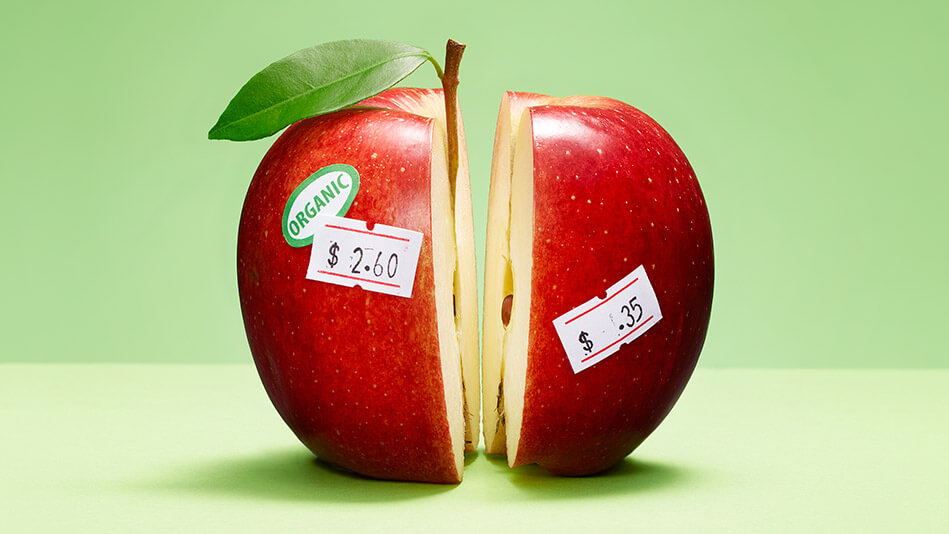
So I know I am probably already painting a prettier picture for organic foods but honestly I am not. Yeah free of growth hormones and antibiotics and free from pesticides and crappy fertilizers. I get it sounds way better but let’s look it a bit differently. You walk into a grocery store wanting to buy fresh apples. You see organic apples and you see regular apples. Often times what you will see is that the price for the organic produce is quite pricey when compared to its non-organic counterpart. Also what is quite often seen is the difference in appearance and size of the produce. Often conventional produce appears larger than organically grown produce.
However, conflicting research does exist. Some research has demonstrated that some organic produce has shown to have small to moderate increases in some nutrients with the best evidence of a significant increase in certain types of flavonoids, which have antioxidant properties. However, most research has shown that there is not a significant difference in nutrient density and quality between organic and conventionally grown produce. However, consuming organic foods may reduce exposure to pesticide residues and antibiotic-resistant bacteria. “Are Organic Foods Safer or Healthier Than Conventional Alternatives?: A Systematic Review“
So I’m all about being healthier and choosing healthier, but even for someone like myself who doesn’t make buku bucks including the majority of the patients that I see, saving a few extra dollars here and there can be quite crucial. So since there is not a significant difference in nutritional value in organic produce (if any really at all) I will choose conventionally grown produce. In regards to the pesticides and fertilizers used – this is where I say it is always best to wash and clean your produce thoroughly before eating it – even if it’s organic.

So what about organic meat? I won’t lie. I love the idea of antibiotic and hormone free foods; however, switching to organic meat, besides just paying more out of your pocket, does nothing to decrease the risk for diseases that still are the biggest terminators of American lives. Cholesterol, fats, and animal protein are the foremost offenders in meat that are linked with higher rates of cardiovascular disease, diabetes, and certain cancers. Furthermore, they are also associated with the growth of the many risk factors that contribute to the rising numbers of people who are obese and/or have hypertension (high blood pressure).
“Animal products, however they are produced, increase the risk of many diseases.”
-Dr. Neal Barnard, MD – Naked Food Magazine
“Your pantry is your first line of defense against food-borne illness and things like high blood pressure and cholesterol.”
-Joe Bastianich
Just in case one didn’t already know – our livers already produce all the cholesterol that our bodies need, so there’s no need to get anymore from outside sources. And just to make sure this is made very clear – cholesterol is ONLY found in animal-based foods – so all dairy products, all meats, fish, and eggs all have cholesterol. And this also goes for organic meats and organic animal-based foods. Even the leanest cuts of meat still contain a considerable amount of cholesterol because the clogging menace loiters in the muscle tissue. However, all plant-based foods contain NO cholesterol.
So again speaking from a health coach’s perspective, if only I could earn $1 for every time I hear “but I don’t have a cholesterol problem……………..” I’d be one heck of a wealthy lady! For starters, please don’t tell me that if you have not had your blood lipid profile done EVER or not done in a very long time. Secondly, if indeed you do not have high cholesterol, it does not mean you are in the clear to eat all the meat, eggs, and dairy you want. Yes, you the person with the so-called glistening arteries put yourself at risk the more you eat meat. Several studies, such as the one conducted by Zhong, Horn, Cornelius, et al (2019) have shown that a higher consumption of dietary cholesterol or eggs was greatly linked to a higher risk of incidences of CVD and death. So in retrospect the less cholesterol sources found on your plate means lower risk for cardiovascular problems for YOU!” <high five!>
Some of the World’s leading heart researchers like Michael DeBakey, MD and Dean Ornish, MD say that the most favorable amount of cholesterol intake for an adult is “0.” Therefore, a diet made up of red meat, including chicken, turkey, fish, dairy, and eggs, is NOT a “0-cholesterol” diet. And from another post on my blog – remember someone who is thin can still have high cholesterol and suffer from cardiovascular disease…….
But the risks of meat consumption doesn’t just end with cholesterol. There’s this thing called saturated fat. 😦 Saturated fats are worse than cholesterol and its content is not governed by a food’s organic status. The disadvantage of saturated fat is that it triggers the liver to produce more cholesterol. Saturated fats are quite easy to tell apart from unsaturated fats since they are solids at room temperature; and in meat products it is marbled throughout all meat and poultry. Therefore, the only way to avoid it is to not eat meat at all. And if you tell me, “well I remove the skin from my chicken breast….” I’ll say “great, but 20% of the calories still come from the saturated fat hiding in the muscle of that chicken breast.” And FYI – approximately 15 to 30% of the fat found in fish (depending on the type of fish) is saturated fat. Aw booooooooo!
“While organic standards may help to improve some aspects of health, it cannot help prevent obesity, high blood pressure. diabetes, heart disease, and many forms of cancer, nor will it cure the environmental contamination and resulting health hazards plaguing the production and consumption of animal foods.”
“Organic Meats Are Not Health Foods” – Naked Magazine
Let’s just get really down to the simple basics again. Eat more plants! Fruits and vegetables, whole grains, beans and lentils, nuts and seeds. Organic or not less animal products all together will do your body right now and in the long run. Whether you choose organic or not really becomes now more of a personal choice based on your preference and budget allowance.
To end this blog post let’s focus on the benefits of eating plant-based foods – Organic and non-organic. So whether you’re contemplating eating less meat or avoiding it completely, the benefits are clear: less risk of disease and improved health and well-being. Particularly, less meat decreases the risk of: heart disease, stroke, obesity, hypertension, high cholesterol, type 2 diabetes, and certain cancers. Need I really say more? Not right now….. 😉
Here’s to Your Health!
 Blonde and Zesty