

Sitting at Bazbeaux Pizza in Broadripple, a small free-spirited village of the greater Indianapolis, Indiana area, I was having lunch with my six year old daughter. Unlike her mother who mainly eats plant-based, she still enjoys her meat and cheese. However, in this case she enjoyed a plain cheese pizza while I enjoyed a pizza called the “Fresh Pizza” that had no sauce except for a little olive oil drizzle, Arugula lettuce, roasted red tomatoes, fresh basil, and sprinkled with nutritional yeast. Set aside from the fact it was very tasty, the young man serving my table made a comment, stating that he was vegetarian and that pizza was one of his favorites. I being friendly, said to him that I eat more plant-based foods except cheese was my weakness, so this pizza caught my attention and I wanted to try it. Little did I know that this simple comment was going to lead him on a heated conversation about the Amazon wildfires and how “meat eaters” were the main cause of it. (This was definitely a “D’Oh” moment of mine).
Now I know some people choose to become vegan for environmental reasons, and that’s great, because we all have to share this “space” we call Earth. However, since this topic seems to be high on the radar right now I figured I too would look more deeply into it. And I can’t help but say, this “issue” isn’t something new. In fact deforestation has been going on for quite some time and brings about way more concerns than just tearing down trees and destroying nature to create more space to raise livestock for the growing numbers of “meat eaters” out there and increased consumption. The only thing RIGHT NOW is YES the Amazon is ablaze devastating a place that offers the world not only food (including herbs and spices) through vegetation but also medicine…… yeah lets not forget that fact. Furthermore, the Amazon forest is a huge contributor to the World’s climate and is crucial in the fight against global warming. And let me get even a little bit crazy here – destruction of such a place also destroys an abundance of life, homes to living creatures adding to the potential of extinction for some species, increase in vector-borne illness (oh yeah we often don’t think of that either) which can (and has) caused an increase of human illnesses across the world – not just to the locals.
I’ll definitely go into more details on some of my points above throughout this post but for some reason this triggered me to go back to one of my research papers that I actually did on deforestation of rainforests and how it affects multiple areas and creates various issues. So first what is DEFORESTATION? I’m going to use in quotes what Brittanica.com says deforestation is: “the clearing or thinning of forests by humans. Deforestation represents one of the largest issues in global land use. Estimates of deforestation traditionally are based on the area of forest cleared for human use, including removal of the trees for wood products and for croplands and grazing lands. In the practice of clear-cutting, all the trees are removed from the land, which completely destroys the forest. In some cases, however, even partial logging and accidental fires thin out the trees enough to change the forest structure dramatically.” In some cases for some trees and plant species extreme heat is needed to break open seed pods and continue the production cycle of certain plant species, but the continuation of burning, clearing out, and tearing down and such as is the current case out of control wildfires only causes vaster amounts of damage – that can be irreversible. But as I mentioned earlier the act of altering forests to land for other purposes has an extensive history.
As I was researching more into deforestation period……. I found some funny posts that caught my attention yet still made some decent points. One was veganism isn’t so environmentally friendly – stating something about the deforestation of land to grow more avocado trees to appease the demand of avocado consumption around the world. This made me cock my head to the side quite a bit, but the point that was being made that is feasible is that the demand of foods like avocados and quinoa have gone up even for the locals who depend on those foods. But the argument that was trying to be made was that it was more environmentally friendly to eat meat from a farm down the road than eat something that has been shipped from across the globe. Their exact words were this: ” Eating lamb chops that come from a farm a few miles down the road is much better for the environment than eating an avocado that has travelled from the other side of the world.” Well for starters maybe more cost effective now, but this has nothing to do with the current issue of deforestation of the rainforests and wildfires but again down the road if meat is the staple in one’s diet, it’s quite likely than that one can anticipate more costs out of pocket to pay for health issues that arise from eating meat (and other forms of saturated fat) in the long run even if it just came from “down the road.” And as always from one who supports veganism a post was made about how veganism could “feed the world with zero deforestation.” Anyways, we all take sides and yes it does turn into a blame game in some ways. (Dropping my head into my hands for a moment)
Cattle ranching is the leading cause of deforestation in the Amazon rainforest. In Brazil, this has been the case since at least the 1970s: government figures attributed 38 percent of deforestation from 1966-1975 to large-scale cattle ranching. Today the figure in Brazil is closer to 70 percent.
https://rainforests.mongabay.com/amazon/amazon_destruction.html
Okay so let’s break it down. We have the clearing of valuable land in the Amazon, that’s removing markingly valuable resources. Mainly for creating grazing land for livestock to later be used to feed human mouths but also expansion for even residential areas in some cases. The fires are getting out of control causing way more destruction at an alarming rate. Plants and trees take in carbon dioxide and release oxygen back into the air in the process of photosynthesis. The Amazon, which covers 2.1 million square miles, often is referred to as the “lungs of the planet” because the Amazon rainforest produces 20% of the oxygen in the Earth’s atmosphere. To me deforestation and burning of the Amazon resembles almost a “lung cancer,” the more we burn and destroy the less oxygen is produced which we know cannot be a good thing.
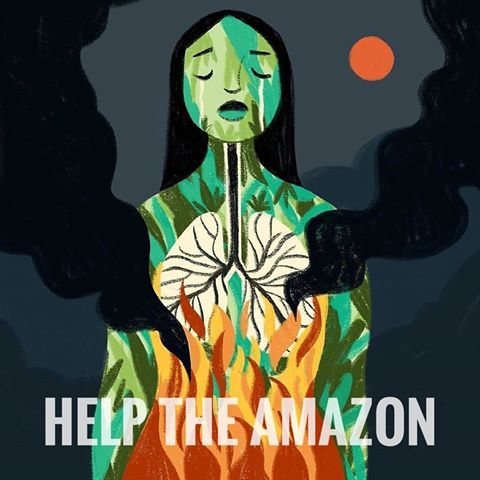
Another issue of deforestation of the Amazon (or nature/trees on a large scale) is climate alterations and global warming. The loss of trees and other vegetation can cause desertification, soil erosion, fewer crops, flooding, and a rise of greenhouse gases into the atmosphere. Trees and other forms of vegetation also help control the level of water in the atmosphere by helping to regulate the water cycle. With fewer trees, due to deforestation, there is less water in the air to be returned to the soil. This causes dryer soil and the inability to grow crops, an ironic twist when compared to the fact that the majority of deforestation comes from small-scale agriculture and cattle ranching.
Further effects of deforestation include soil erosion and coastal flooding because trees also help to retain water and topsoil, which provides the rich nutrients to sustain forest life. Without trees, the soil erodes and washes away, causing farmers to move on and add to the continuation of the deforestation cycle. The desolated land left behind from such unsustainable methods than becomes more prone to flooding, particularly in coastal areas.
“Coastal vegetation lessens the impact of waves and winds associated with a storm surge. Without this vegetation, coastal villages are susceptible to damaging floods.”
We also can’t forget about the rainforest offers shelter and is the home of the animal and plant species that resides there. Extinction of certain animals and plants is quite possible due to deforestation because tearing down trees and other forms of vegetation destroys homes to many living species. The majority of wildlife lives in forests and cannot survive when their homes are demolished due to the destruction of their surroundings. Trees and vegetation found in rainforests also provide the canopy that helps regulate the temperature that is crucial for life there – deforestation allows for a more drastic variations in temperature from day to night, which could be detrimental for its inhabitants.
One last thing that I have to add in here, with the concern of what has been happening and is currently happening in the Amazon (and other forested areas around the world) is the potential for the rise of human disease due to vector-borne illnesses. Here is why there is potential for concern: There is an increasing body of scientific evidence showing that the deforestation of tropical forests creates optimal conditions for the spread of vector-borne plagues, such as malaria and dengue. Primates and other animals are also spreading disease from cleared forests to people. For numerous ecological reasons, the loss of forest can act as an incubator for insect-borne and other infectious diseases that vexes mankind. According to Peter Daszak, President of Ecohealth Alliance, which is a part of a global effort to understand and eradicate the causes for disease transference, deforestation creates the ideal situation for some diseases to spread and flourish. For it is not uncommon at all to see a spike of a vector-borne illness in years following vast amounts of land clearance. The outbreak of some of the world’s most serious infectious diseases that emerge come from wildlife and insects in forests. What research has shown is that because of a complex chain of ecological changes, the risk of disease outbreaks, especially those carried by some mosquitoes, typically are amplified after forests are cleared for agricultural purposes.
Okay so I have listed several reasons to why what is happening now in the Amazon is NO GOOD and yeah it’s sickening. But not that I support at all what is going on but I believe it goes beyond just keeping up with the mouths that are hungry for “more meat.” I do support more locally grown anything; but I always take the stance on we all have to take a part in caring for the world we live in. How can one person get all bent out of shape over this fiasco, yet as I left my table you were also the one I saw littering. (insert shoulder shrug here ———> _________) If we could fix and change all things “bad” I’m sure the majority of us would do it in a heartbeat. However, we can sit and point fingers at each other or better yet look at and worry about ourselves. Do your part in what way you feel you are able to help the planet we live on. I choose to not litter, I choose to eat more plants and less animal anything, I choose to be courteous and kind to others, etc. Hoping that I’m not getting too much off topic here, but you should be getting my point. I also feel for the indigenous people of that land – I sense that they aren’t even heard or are just overlooked, and heck if it brings in more money and profit (and possibly) publicity – than who the heck cares about the real issues that can affect all of us on even a global scale. (Please note my sarcasm) That’s the sickening part.
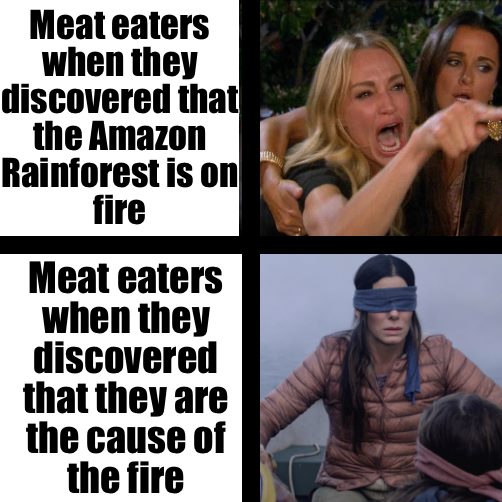
In the meantime, here are 7 steps you can take to help save the Amazon and the world’s rainforests, from the Rainforest Action Network. (Adventure-Life.com)
- Reduce your paper and wood consumption.
- Reduce your oil consumption.
- Reduce your beef consumption.
- Hold businesses accountable.
- Invest in rainforest communities.
- Support the grassroots.
- Support Rainforest Action Network.
Here’s to Your Health! In this case too, Here’s to the Planet’s Health!
 Blonde and Zesty